
News & Insights

FISITA Webinar Premium: Automated vehicles: Real-world challenges and opportunities of large-scale AV deployment

FISITA Webinar Premium is a series of carefully curated webinars available only to FISITA corporate and society members, featuring guest keynote speakers, and panel discussions with experts drawn from FISITA membership. Registration is open now for the first FISITA Webinar Premium event, on 11 February 2026: “Real-world challenges and opportunities of large-scale AV deployment”

Read more »

2025 in the rear-view mirror

Three conferences, a new president, a host of new members, and all-new digital – much has happened at FISITA in 2025, write FISITA CEO Chris Mason and CTO Martin Kahl

Read more »

FISITA webinar explores role of AI in CAE

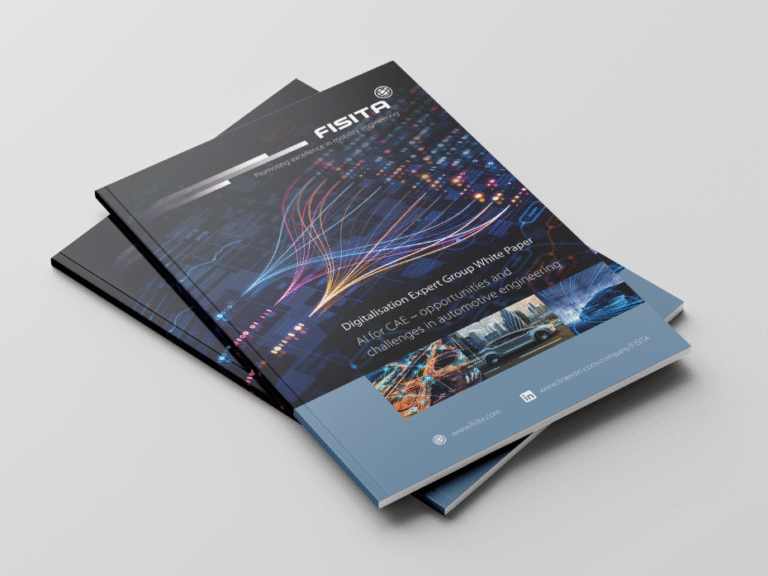
Artificial intelligence has the power to transform computer‑aided engineering (CAE), and the FISITA Digitalisation Expert Group’s recent webinar AI for CAE – Opportunities and Challenges in Automotive Engineering explored both the promise and the pitfalls of this emerging technology, with case studies and key findings from the working group’s upcoming white paper of the same name.

Read more »

FISITA Newsletter – November 2025

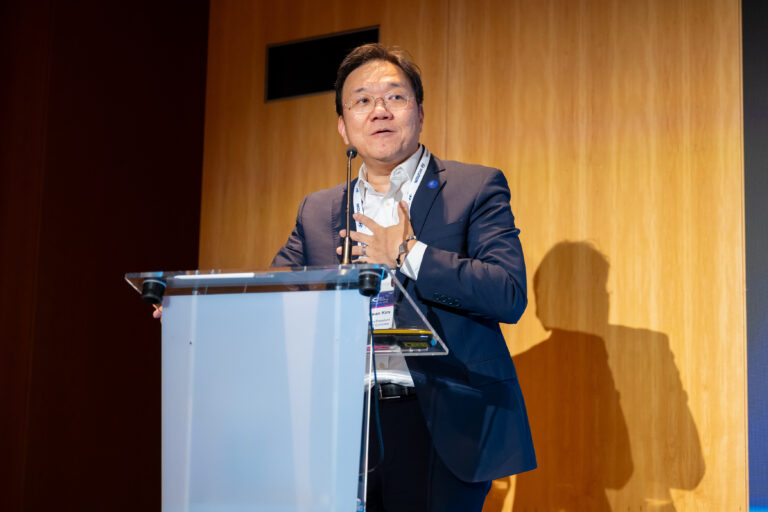
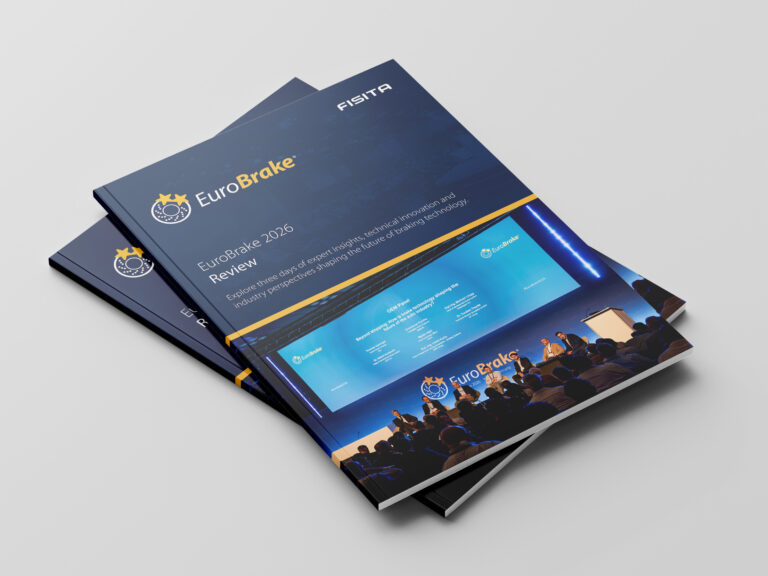
Save the date for the FISITA World Mobility Summit 2026, hosted by FISITA President ChangHwan Kim on 4–5 November in Seoul. Supported by KSAE, the biennial summit brings together leaders of FISITA member organisations for two days of thought leadership, knowledge sharing, networking and the Academy of Technical Leadership Awards. Alongside this, preparations for EuroBrake 2026 are underway, with sponsorship opportunities available and the Call for Papers now open. FISITA also highlights recent digitalisation insights from its latest webinar and

Read more »

FISITA Webinar: AI for CAE – opportunities and challenges in automotive engineering

AI-driven simulation technologies are increasingly promoted as a potential “holy grail” for the automotive engineering community, promising accelerated vehicle development and breakthrough design capabilities. Nonetheless, important questions remain around topics such as:

– The extent to which machine learning solvers can already deliver reliable, swift, and well-reasoned design decisions.
– The inherent drawbacks and risks of data-driven simulation methods.
– The challenges which must be addressed to enable large-scale implementation of machine learning solvers in safety-critical automotive

Read more »