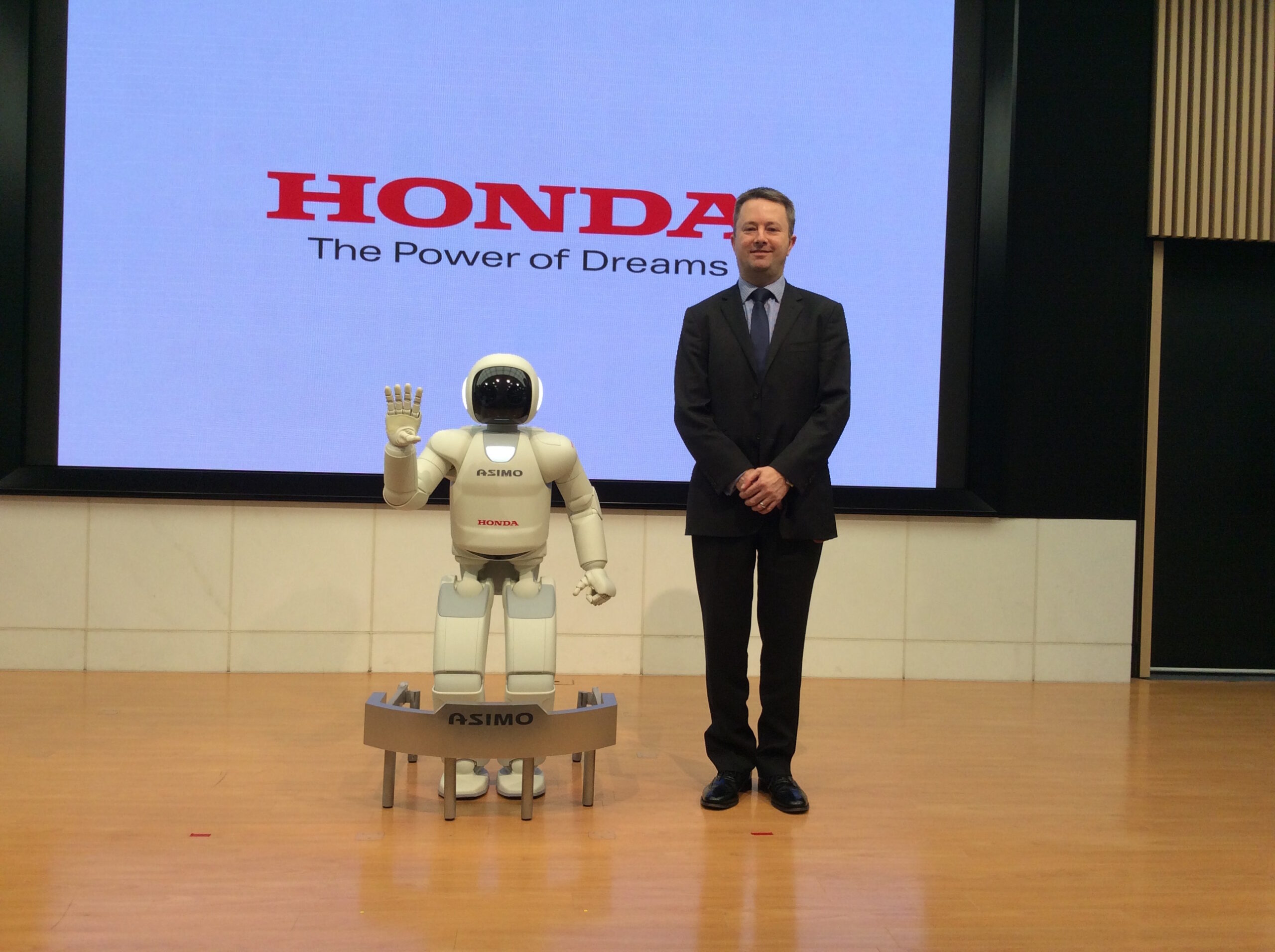
A reflection on leadership, collaboration and the relentless pursuit of progress, for industry, people, and planet, by Chris Mason, CEO, FISITA
When Alan Mulally took the helm at Ford in 2006, the company was haemorrhaging billions. What he brought with him wasn’t a rescue plan in the conventional sense. It was a philosophy: ‘Working Together’ – one team, one plan with total transparency, and the radical idea that transformation happens not through individual brilliance but through people choosing to work genuinely and consistently with each other.
I’ve been thinking about that a lot lately, because 12 years at FISITA will do that to you.
Twelve years of watching the mobility landscape shift beneath our feet, 12 years of convening engineers, executives and researchers from across the globe, and 12 years of becoming increasingly convinced that the lesson Mulally taught Ford is the same lesson the entire mobility ecosystem needs to internalise right now.
- The world has changed, but the need for alliance has not
When I joined FISITA, electrification was a conviction held by relatively few, automated driving was a research topic, and the software-defined vehicle was a concept paper. Today, each of these is a contested, complex, racing reality and none of them respects national borders or organisational silos.
Transformation happens not through individual brilliance, but through people choosing to genuinely work with each other
The challenges of the mobility transition are genuinely global; a regulation shaped in Brussels affects a supplier in Seoul, a battery chemistry breakthrough in Shanghai reshapes a manufacturing strategy in Sunderland, an AI capability developed in Silicon Valley raises safety questions that engineers in Tokyo need to answer.
This is precisely why FISITA exists – not to advocate for any one technology, company or geography but to actively promote co-operation between the brilliant minds working across all of them. In a world that sometimes pulls towards insularity, we remain resolutely, unashamedly global.
- The pre-competitive space is where the real work happens
One of the most valuable and least celebrated spaces in any industry is the pre-competitive space. The place where competitors sit in the same room, set aside market dynamics and ask: ‘What do we need to figure out together, for the good of all of us and the people we ultimately serve?’
Mulally called it ‘having a compelling vision that everyone understands and is aligned to.’ FISITA calls it our international technology of mobility alliance. I have seen, across 12 years of convening these conversations, what happens when the right people are in the same room without a competitive agenda; standards get shaped and safety frameworks get built, young engineers get connected to mentors who change their careers, and the future of mobility – which belongs to all of us – gets a little clearer.
The pre-competitive space is where the future gets built. It’s where we choose progress over positioning
That is what FISITA’s collaborative model makes possible, and it is something I have never taken for granted.
- Leadership in a transition era means enabling others
The mobility transition is the largest industrial transformation of our generation. It is also one of the most contested, technically, commercially and politically. In this environment, I think leadership means something different to what it once did.
It doesn’t mean having all the answers, it means creating the conditions for the right questions to be asked, by the right people, with the rigour and openness they deserve.
FISITA’s ‘Enabling’ value is the one I return to most in this context. Our role is to make the right conversations happen at the right time and to ensure that thought leadership in this space is both expert and genuinely forward-looking, and not just a platform for whoever shouts loudest.
Mulally understood that a leader’s job is to serve the team, to give people clarity, confidence and connection, and to hold to the plan when the pressure to abandon it is immense. Twelve years at FISITA have taught me that the same is true of an organisation like ours; we are not here to lead mobility’s future, we are here to enable the people who will.
- What comes next
The next decade of mobility will be defined by decisions made in the next three to five years, on software architecture, on safety standards for automated systems, on battery technology pathways and on how we regulate AI when it’s making decisions at 70mph.
These decisions require the full diversity of the global mobility ecosystem, engineers and ethicists, policymakers and practitioners, established manufacturers and ambitious new entrants. They require exactly the kind of inclusive, expert, purposeful dialogue that FISITA has been facilitating for over 70 years.
The next chapter is already taking shape. In November, we gather in Seoul for the FISITA World Mobility Summit, hosted by FISITA President ChangHwan Kim and the team at Hyundai, to do exactly this work: connecting the voices shaping intelligent safety, automated driving and carbon neutral mobility. Then, in June 2027, we will bring the global community to Barcelona for the FISITA World Mobility Conference 2027.
Twelve years in, I am more convinced than ever that our model – global, collaborative, enabling – is not just relevant, it is essential.
Working together isn’t a nice-to-have for the mobility transition; it’s the only way through it.
Chris Mason, CEO, FISITA